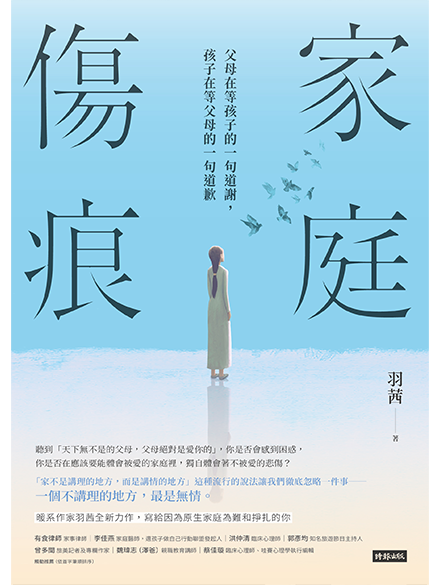
While raising her own family, author Yu Chien saw how children are wholly disadvantaged in the parent-child relationship. This book shows why the parental roles have become sacrosanct and examines structural damage in families from a sociological perspective, guiding readers to an understanding of real love.
Do parents always love their children? After becoming a mother, author Yu Chien realized how vulnerable children are within a family and reflected on the trauma she experienced in her own family of origin but had never been able to express. These two perspectives became her central motivations for writing this book, in which she debunks the “myth of love” in families. Combining sociology, life experience, and a wealth of observations, she analyzes the power and cultural imbalances in parent-child relationships, focusing in particular on how the family of origin shapes a person’s self-worth and affective model.
In twenty-five emotional but incisive essays, the book shows how parents unintentionally hurt their children, and how children learn to suppress their needs, stay sensible, deny their feelings, and even come to think they are unworthy of being loved. Challenging the deeply rooted concept that “parents are always right”, the author offers anecdotal evidence that love is not just about care and responsibility: it also requires respect and understanding.
This book is not an indictment of parents, but an attempt to break the silence and spark genuine conversation. It shows tremendous empathy for children’s emotional experiences, allowing readers with similar family trauma to understand that, rather than being too sensitive or too fragile, they have not been treated well in the past.
If you’ve ever asked yourself, “Why do I always feel like I’m not good enough? Why have my relationships with my family always been so stressful?”, this book will take you to the heart of the issue.