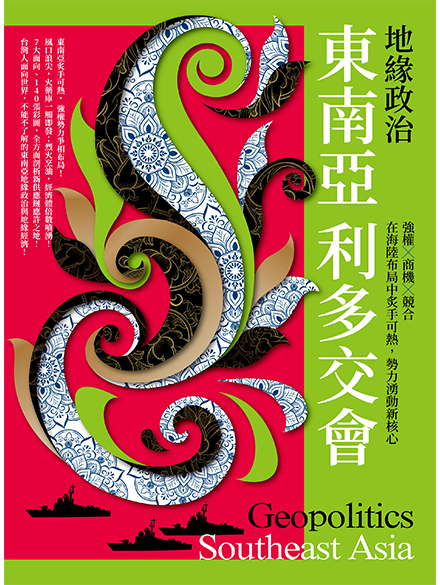
An understanding of global politics requires an understanding of Southeast Asia, which has become a focal point in the competition for global power. This book gives the reader a solid grounding in Southeast Asia's geography, history, economy, and international relations, leading to a clear understanding of this strategically key region.
Home to five strategic straits that affect one-third of global maritime trade, Southeast Asia lies at a geopolitical crossroads. It is also a stage for the power struggle between major players such as China, the United States, India, Japan, and Australia. Drawing on a combination of geography, history, and analyses of international relations, this book guides readers through the defining features of Southeast Asia's geopolitics and current political landscape.
In the first of its seven chapters, the book looks at Southeast Asia's geographical features, explaining why the area is strategically important. It next discusses Southeast Asia's history, analyzing how the area's past influences present politics. Chapter three delves into Southeast Asia's natural and cultural geography, outlining its frequent territorial disputes. Chapter four examines how the United States, China, India, Japan, Australia, and the European Union view Southeast Asia and their interactive strategies. Chapter five describes the current challenges facing Southeast Asia and proposes possible solutions. Chapter six explores Southeast Asia's developmental advantages from the perspectives of international relations, political economy, and national defense. The final chapter presents Taiwan's multiple perspectives on Southeast Asia.
This book, accessible and insightful, combines precise analysis with an abundance of visual aids to provide readers with a comprehensive strategic map of Southeast Asia. It is suitable not only for political studies and business decision-makers, but also for anyone interested in international relations.