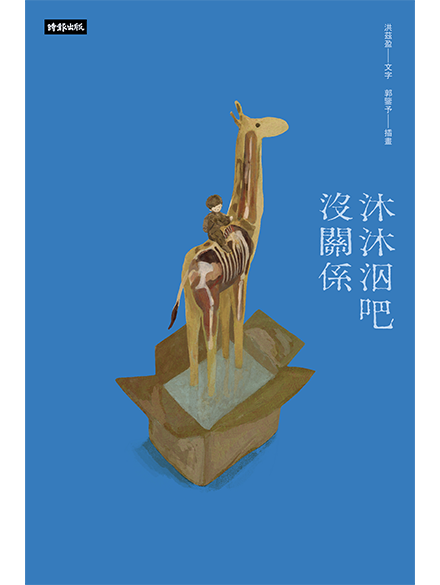
Twenty stories, thirty-plus characters, no obvious connections – but eventually these stories intertwine, flowing together into a "river of life". Interspersed with soft, dreamy illustrations, It's Fine to Float Adrift poetically depicts life's ordinary yet profound moments.
This book's title is a reference to drifting aimlessly through life. Featuring a life drawing model, a photographer, a nursing home resident, even a scarab beetle and a fish, these twenty short stories appear at first glance to be unrelated. And yet, subtle points of connection link them, thus depicting life's intricate patterns as well as its vicissitudes.
The stories can be divided into four main themes: "Life Drawing" and "Crossing", for example, explore the perceptions and impressions of individual experience as life nears its end. In contrast, "Dress-Up", "The Weight of a Letter", and "You Are Not a Fish" use everyday moments to show different perspectives on the struggles and transformations that people and even animals experience after the death of a loved one. "Exchange" and "A Day Like Any Other" explore life's "losses", such as illness, guilt, and frustration, illustrating crucial life lessons beyond birth, aging, sickness, and death, while "Second Marriage" and "Nausea" offer lighter takes on the occasional upheavals caused by misunderstandings and life's turmoil, depicting the reality of everyday moments. The magical elements incorporated into many of the stories create not only a sense of the beauty in conflict but also highlight life's unpredictability.
Ultimately, these seemingly stand-alone stories interweave to form a flowing "river of life", allowing readers to witness both life's absurdity and its tender moments as the characters drift along, either floating or sinking. Hung Tzu-Ying's poetic yet restrained prose, combined with the warmth of Kuo Chien-Yu's illustrations, makes this a book of lasting impressions even when dipped into at intervals. Sure to resonate, these stories let readers feel as if they are glimpsing subtle reflections of themselves in the characters' worlds.