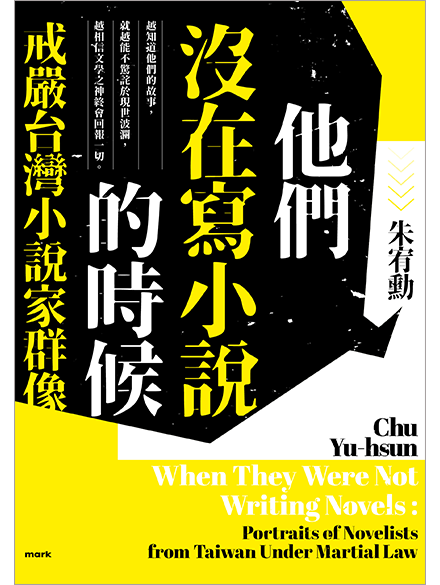
During Taiwan’s period of martial law, the political atmosphere was conservative and speech was restricted. Taiwanese literature, however, surmounted all restrictions to develop in very different directions. This book introduces nine of this period’s most representative writers and their legacy to Taiwanese literary history.
Part of a new generation of writers, Chu Yu-Hsun has devoted significant time and energy to educating people about literature in addition to writing fiction and criticism. Among his most important projects are books introducing authors and works from Taiwanese literary history. Representing the culmination of six years of work, When They Were Not Writing Novels focuses on nine significant writers active during the martial law period. The book takes a unique approach: rather than analyzing the writers’ works, it explores how they helped to make Taiwanese literature more diverse and viable.
Chung Chao-Cheng, a prolific author known for his tireless support of friends and emerging talent, is by necessity the first author introduced, as so many others’ stories involve him. Similar generous assistance to other authors came from Lin Haiyin, former editor-in-chief of the United Daily News literary supplement, who dedicated herself to discovering and promoting new writers; Chen Qian-Wu, who founded a poetry society and pioneered new horizons for modern poetry; and Hualing Nieh Engle, who co-directed the International Writing Program in the US.
The other five writers featured in the book carved out more individual literary paths: Yeh Shih-Tao left a wealth of peer criticism and reference materials for later generations; Chung Li-Ho, victim to the era’s hardships, poverty, and illness, vomited blood as he revised his manuscripts prior to his death; Guo Songfen’s politics forced him to live in the US after studying abroad; Chen Yingzhen firmly supported leftist and anti-localist positions and moved to China in his later years; and Chi Ten-Shung chose a modernist writing style, breaking with his literary friends.
The author’s accessible prose shows both the literary constraints of the times and the creativity they fostered. In pages interspersed with anecdotes from the writers’ lives as well as the author’s experiences as a reader and researcher, the great names in Taiwanese literary history are given new life, their stories of survival in adversity sure to inspire.