* 2025 Readmoo Readers’ Choice Award
* 2025 Openbook Award
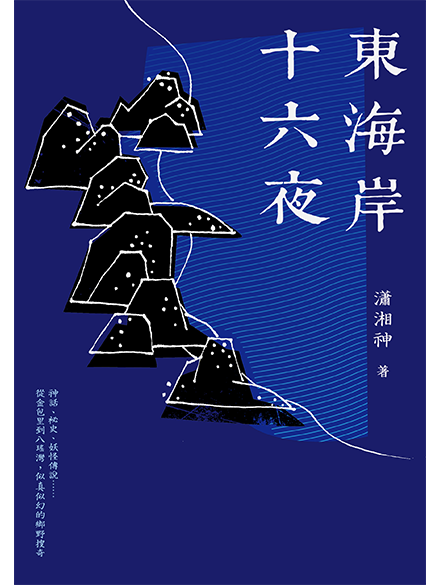
This alternative travelogue combines folklore with history and field research to tell the stories of sixteen regions on Taiwan’s east coast. Both speculative and imaginative, it reveals the gaps in the reader’s understanding of eastern Taiwan’s history and culture. Perfect with a glass of wine or as bedtime reading.
Taiwan’s east coast, which entered modern development relatively late in comparison to the west coast, is renowned for its natural beauty. Its history and culture, however, are often ignored, despite archaeological evidence that eastern Taiwan has engaged in maritime trade with other regions since prehistoric times. Xiao Xiang Shen took note of the relative scarcity of historical and cultural books about the east coast and wrote this book to address the gaps in readers’ knowledge and understanding. Combining his interest in folklore and legends with his expertise in fantasy and mystery writing, he leads readers on an in-depth exploration of eastern Taiwan from the perspective of a “western Taiwan” traveler.
This book follows the author’s journey from Taipei to sixteen regions along the east coast over sixteen nights. Staying in a different region each night, the author recorded local legends and knowledge, often starting with the origins and evolution of place names. “Cape Santiago”, for example, a place name from night three, has Spanish associations but also suggests the presence of Indigenous people at the time of the Spanish conquistadors. The author next takes a closer look at the stories of these Indigenous people and introduces readers to legends and artifacts left behind in the area by Chinese and Japanese conquerors. Along the way, the author also indulges in seafood, ponders his observations amidst beautiful scenery, and contemplates the possibility of historical truth.
Despite its sixteen-night structure, the book compiles the findings of multiple expeditions and compares multiple perspectives, although its blend of narrative and commentary combined with the author’s casual, romantic writing style could cause some to overlook his meticulous reasoning and extensive expertise as a scholar of detective fiction and folklore. This book gives readers not just an entertaining bedtime story but also a deeper understanding of eastern Taiwan’s diversity, as well as insights into how colonialism’s legacy has shaped the landscape and influenced historical interpretations.