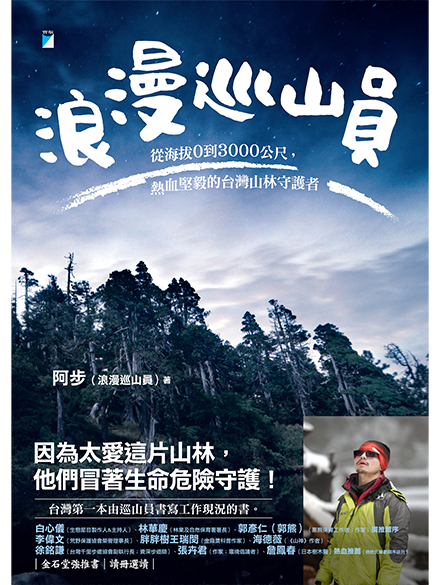
The Radical Ranger is the first-person account of author Chang Wei-Chun’s nine years of fighting fires and illegal logging and protecting wildlife in Taiwan’s rugged interior. His lived experience provides an inspiring story of the dangers, challenges and undeniable allure of safeguarding Taiwan’s mountain forests.
The Central Mountains, Taiwan’s high-mountain spine, is a north-south mountain range capped by well over 100 peaks rising above 3,000m and blessed with irreplaceable ecological and cultural wealth. However, the public forest rangers tasked with its protection go largely unsung, their authority and effort often discounted. The Radical Ranger narrates the author (Chang Wei-Chun, aka A-bu)’s real-life story over nine years working as a Central Mountain Range forest ranger. Since joining up in 2015, A-bu has done mountain rescue work, fought wildcat fires, rescued trapped wildlife, conducted regular forest patrols, and prosecuted illegal activity. This groundbreaking work is the first to explore comprehensively the challenges of forest ranger work in Taiwan and to highlight the structural problems that stand in the way.
The first section of this book narrates the challenges of fighting fires, illegal logging, and other illicit activities. The second recounts A-bu’s forest ranger training, deep-forest missions, and stories of his colleagues. The third and final section highlights bureaucratic gaps and systemic difficulties as well as inherent contradictions in the human-nature relationship. Drawing on lived experience, the author describes confrontations with rogue logging gangs, detailing their targets and strategies and bewailing the paucity of resources available to stop them. He also details the unwieldy and generally inadequate equipment rangers have on hand to bring deadly forest fires under control. Further, he shares the myriad tasks rangers regularly perform to help protect the environment – from rescuing black bears to stopping illegal camping, thwarting disruptive nature paparazzi, and dismantling illegal temples. All told, this work highlights in approachable and remarkably relatable prose the complex of critical tasks performed by Taiwan’s forest rangers.
The Radical Ranger gives a sincere account of both the grueling hardships and exceptional rewards of high-mountain work, drawing readers into the ineffable beauty of Taiwan’s interior, demands of forest ranger work, and sheer power and romance embodied in safeguarding this treasured land.